Projects & Research Interests
My research focuses on understanding how native arbuscular mycorrhizal fungi (AMF) can be conserved, optimized, and applied to improve plant performance, ecosystem restoration, and sustainable agriculture. Across restoration and agricultural systems, my work addresses practical questions about fungal deployment: Which fungi provide the greatest benefits? How much inoculum is needed? When and where should fungi be applied?
Organic Veg
Healthy soils depend on diverse microbial communities, yet the role of native AMF in organic crop production remains underutilized. Through collaborations with organic growers, this research investigates how regionally adapted AMF influence crop growth, nutrient acquisition, yield, and soil health.
Studies across vegetable and specialty crops—including tomatoes, peppers, beans, leafy greens, herbs, potatoes, cucumbers, grapes, hops, and sunflowers—help identify crop-specific responses and develop practical recommendations for integrating beneficial fungi into sustainable production systems.
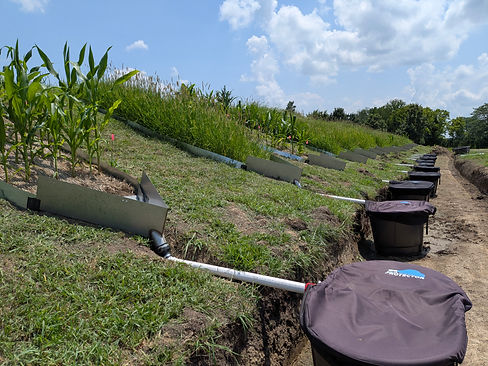
Prairie Strips
Prairie strips are one of the most effective conservation practices for reducing soil erosion, improving water quality, and providing habitat for wildlife.
However, they are rarely restored with native arbusular mycorrhizal fungi (AMF), despite these fungi being essential partners for most prairie plants. AMF extend plant root systems with microscopic fungal networks that capture and sequester phosphorus in their biomass, reducing phosphorus losses while improving plant nutrient acquisition.
In this project, we are testing whether restoring native AMF can further enhance prairie strip performance by increasing native forb diversity and reducing nutrient runoff. We will measure total dissolved solids, phosphorus concentrations, sediment loss, and other water-quality metrics to determine whether fungal restoration can make this proven agricultural conservation practice even more effective.

Optimizing AMF in Restoration
Successful restoration requires more than adding beneficial fungi—it requires knowing how, when, and where to apply them.
My research develops evidence-based approaches for integrating native AMF into restoration projects at scales relevant to land managers and practitioners. Field and greenhouse studies evaluate optimal inoculum rates, timing of application, placement methods, direct seeding versus seedling establishment, and the effectiveness of different planting and application techniques.
The goal is to develop standardized approaches that make AMF restoration scalable, cost-effective, and scientifically validated so beneficial fungi become a routine component of ecological restoration.
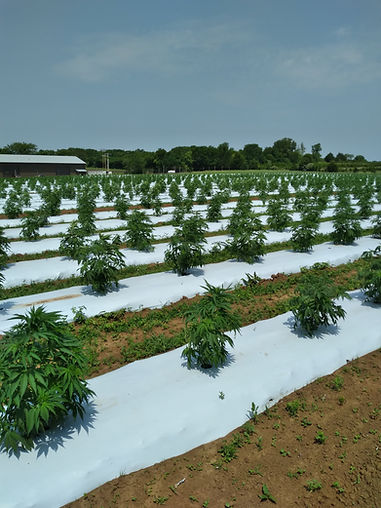
Industrial Hemp
Industrial hemp provides an opportunity to explore how beneficial fungi influence emerging sustainable crops. This research investigates how native AMF affect hemp growth, nutrient acquisition, soil health, and crop performance under different management practices.
By understanding plant–fungal interactions, this work aims to develop strategies that improve nutrient-use efficiency, reduce external inputs, and support more resilient agricultural systems.